Custom sheet metal manufacturing
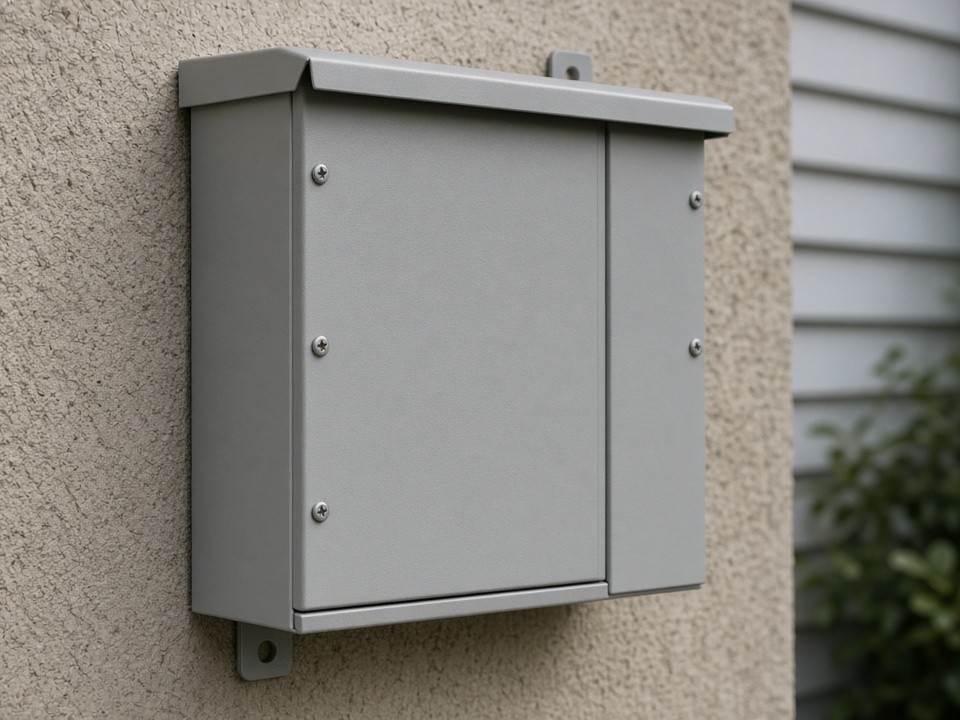
Custom NEMA 3R Enclosures for Outdoor Power Equipment
Manufactured to your approved drawings for North American outdoor power applications, including transformer and instrumentation housings. In-house laser cutting, CNC bending, welding, hardware insertion, and powder coating support repeat production from prototypes to recurring orders.
Send your drawings and annual volume for a manufacturing review and quotation.
50
People across manufacturing and engineering
5 + 6
Mechanical/manufacturing engineers and QA/QC specialists
10–500
Typical high-mix, low-to-medium volume batch range
Application fundamentals
NEMA 3R protection and ventilation
NEMA 3R is commonly specified for outdoor electrical equipment requiring protection against rain, sleet, and external ice formation. Openings, seams, doors, and drainage paths all influence in-service performance.
Ventilation adds a design challenge: louvers need to release heat while limiting wind-driven rain entry. Their geometry and placement should reflect airflow needs, mounting orientation, and exposure—not serve as a cosmetic detail.
What a louver design review considers
Blade profile and direction
Angled blades and overlapping geometry can help deflect rain while maintaining an air path.
Opening size and free area
Open area affects airflow; increasing it without considering splash paths may increase exposure.
Placement and orientation
Position louvers around heat sources, internal clearances, and the intended installation orientation.
Barriers, seams, and drainage
Screens, drip edges, secondary deflectors, roof details, door joints, and drainage provisions may all matter.
We can review louver geometry and formed features for manufacturability. Your engineering team should define airflow targets, temperature limits, rating requirements, and the appropriate validation plan.
Designed around the complete assembly
Review the details that shape outdoor performance
We fabricate sheet metal components to your approved design. Final enclosure performance depends on the complete design, materials, assembly, and verification plan; fabrication alone does not establish a NEMA rating.
Confirm the requirement
Specify the applicable enclosure standard and responsibility for validating the completed assembly.
Define thermal targets
Share heat dissipation needs, operating limits, and airflow or temperature-rise criteria.
Describe exposure
Identify mounting orientation and relevant rain, wind, and environmental conditions.
Plan service access
Show door swing, instrument access, cable entry, lifting features, and maintenance clearances.
Specify material and finish
State steel grade or thickness, coating system, color, and corrosion-related requirements.
Set the production plan
Include prototype quantity, annual volume, forecast, and expected order frequency.
Connected production
In-house processes from cut parts to coated assemblies
Principal sheet metal operations run under one roof, reducing dependence on external processors for key production steps. Engineering support includes sheet metal unfolding, bend-line review, structural detailing, and manufacturability feedback before production.
Production capacity and timing are confirmed against the drawing set, material requirements, order quantity, and current schedule.
Laser profiling
Three fiber laser cutting machines, including 12 kW and 6 kW systems
CNC forming
Five press brakes across OG35, OG100, and OG200 tonnage ranges
Hardware and tapping
Automated clinching, servo tapping, and drilling-tapping equipment
Welding
Laser, MIG, TIG, and cold-welding stations
Powder coating
In-house preparation and a 2500 × 6000 mm coating line
Large-part setup
Assembly platforms up to 2000 × 6000 mm
Cold-rolled steel powder-coated enclosures, ready for repeat programs
Cold-rolled steel can provide a consistent surface for forming and finishing when the design, environment, and coating system suit the application. Consolidated cutting, forming, welding, and in-house powder coating can simplify supplier coordination for repeat batches.
Specify the coating system, color, surface preparation, and applicable performance criteria. Coating suitability for the installation environment should be established by the project team.
Quality and fit
Checks aligned with your drawings and quality plan
Our six-person QA/QC team supports incoming material checks, production inspections, first-article inspection, and pre-shipment review.
- Material verification against purchase specifications
- Critical dimensions, formed geometry, holes, slots, and hardware locations
- Weld condition, assembly fit, and coating appearance
- First-article documentation and shipment inspection records
Identify critical-to-quality dimensions, inspection standards, and documentation needs in your RFQ. State any required environmental, ingress-protection, or electrical testing separately so responsibilities and acceptance criteria can be agreed before production.
Formats and quantities we review
Typical work ranges from high-mix, low-to-medium volume batches of 10 to 500 units to recurring annual supply programs. Larger runs are considered when design, schedule, and capacity plans are confirmed.
- Outdoor transformer housings and protective sheet metal covers
- Instrumentation cabinets and utility equipment enclosures
- Electrical cabinets with formed louvers and access panels
- Larger enclosures and structural assemblies up to 4–6 meters, subject to design review
For larger programs, share your forecast, release schedule, and packaging requirements so production planning and material procurement can be assessed alongside unit pricing.
Send a drawing, even if the louver detail is still in development
Our engineers can review manufacturability and flag geometry that may need engineering validation.
Design inputs
Material, thickness, flat patterns, bend allowances, return flanges, door clearances, and structural details.
Features and assembly
Louver geometry, cutouts, weld locations, cosmetic requirements, PEM nuts, studs, and standoffs.
Request a NEMA 3R enclosure RFQ
Get a manufacturing review for your next program
Send 2D drawings or 3D CAD files with enclosure dimensions, material and thickness, louver details, coating specification and color, hardware and assembly requirements, annual usage, initial batch quantity, delivery schedule, and inspection criteria.
For recurring cold-rolled steel powder-coated programs, include your forecast and release pattern. We will review manufacturability and clarify open technical points before quoting.
Email: info@enclosuremfg.com