Custom sheet metal manufacturing
Custom Aluminum Enclosure Manufacturing
Lightweight, heat-conductive enclosures built for mobile and portable devices, vehicle-mounted terminals, industrial equipment, and aerospace communications systems.
Our in-house process spans fiber laser cutting, CNC press-brake forming, hardware insertion, welding, and finishing. For lightweight projects, we work with 5052-H32 aluminum sheet and tailor cutting and forming parameters to your thickness, geometry, and cosmetic requirements.
Send drawings or a preliminary concept for a manufacturability review.
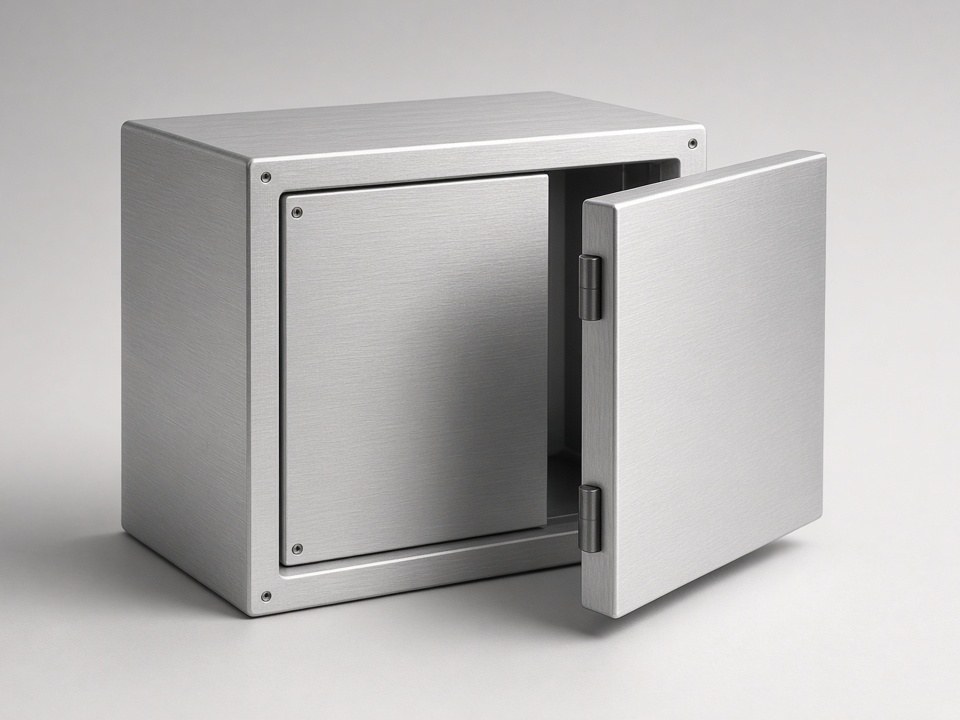
Designed around your application
From formed panels and covers to complete multi-part assemblies, we review mounting, access, heat loads, environment, and finish expectations before production.
3
Fiber laser cutting machines
5
CNC press brakes
24
Welding units across multiple processes
6 + 12 kW
Fiber laser machine capacities
Application-led engineering
Aluminum enclosures built around your application
Aluminum is a practical choice when low weight, heat transfer, and a finishable surface matter. Compared with steel, it can help reduce equipment mass, conduct heat away from internal components, and accept anodized coloring when the alloy and finish specification are suitable.
Mobile and portable devices
Housings designed to support lighter equipment and practical handling.
Vehicle-mounted terminals
Enclosures for vehicle terminals and communication devices.
Aerospace communications
Custom housings for aerospace communication equipment.
Industrial controls
Control boxes, operator interfaces, and instrumentation enclosures.
Power and automation
Enclosure builds shaped to equipment layout and assembly needs.
Custom fabricated parts
Covers, brackets, panels, and multi-part assemblies.
The right design depends on more than material choice. We review enclosure dimensions, mounting points, access needs, heat loads, environmental exposure, and finish expectations before production.
5052-H32 process focus
Cut cleanly. Form with control.
We optimize laser and press-brake parameters around material thickness, part geometry, and cosmetic criteria. Process targets are reviewed against the actual alloy, temper, drawing, and production sample where needed.
High-gloss laser cutting with low dross targets
Our 12 kW and 6 kW fiber laser centers process 5052-H32 aluminum. We select settings to target clean, low-burr cuts and a consistent visible edge, including high-gloss edge appearance where specified. Dross-free results depend on alloy condition, thickness, geometry, and finish expectations, so requirements can be confirmed against a part or production sample.
Small features, cutouts, mounting patterns, and ventilation openings can be incorporated into flat patterns. Engineers review edge clearances and feature placement to help prevent issues during bending and assembly.
Controlled forming with crack prevention in mind
5052-H32 is commonly used for formed sheet metal parts. Bend performance depends on thickness, radius, grain direction, tooling, and geometry. Our CNC press-brake team reviews bend allowances and relief details as part of DFM.
For tight-radius bends or cosmetic surfaces, we assess the design to reduce cracking and visible forming marks. Micro-arc, crack-free bending is a project-specific process target—not a universal guarantee—and should be verified against the alloy, temper, thickness, and drawing requirements.
Hardware, joining, and finishing
- Automated insertion of PEM nuts, studs, and standoffs
- MIG, TIG, and laser welding for suitable designs
- Tapping, drilling, and secondary machining
- Brushed and satin surface conditioning where applicable
- In-house powder coating for parts up to 2500 × 6000 mm
Anodizing can provide colored finishes while retaining aluminum’s surface character, subject to alloy, preparation, geometry, and specification. Our listed in-house finishing line is for powder coating. Include anodizing in your RFQ so we can confirm the available scope and supply arrangement.
Connected production
One production flow, from flat sheet to finished enclosure
We manage key fabrication steps under one roof, reducing handoffs between suppliers and improving visibility across the build. For multi-process projects, fabrication, assembly, and finishing can be coordinated as a connected production route.
Our facility includes three fiber laser cutting machines, five CNC press brakes, seven fastening and tapping machines, and 24 welding units spanning laser, MIG, TIG, and cold-welding processes. Assembly platforms up to 2000 × 6000 mm support fixtures and structural work for larger housings. The powder coating line accommodates parts up to 2500 × 6000 mm within its process envelope.
Engineering and quality support
5
Mechanical and manufacturing engineers
CAD reviews cover sheet metal unfolding, bend allowances, feature clearances, hardware placement, and assembly access.
6
Dedicated QA/QC specialists
Closed-loop checks include material verification, in-process inspection, first-article inspection, and pre-shipment inspection.
Define inspection requirements in the drawing or RFQ. We can review critical dimensions, cosmetic zones, and documentation needs with your team.
Material considerations
Is a 5052-H32 aluminum enclosure right for your project?
Where aluminum can help
- Lower equipment weight: Useful for portable devices, vehicle installations, and applications where mass affects handling or mounting.
- Heat transfer: Aluminum’s thermal conductivity can help spread heat through the enclosure. Performance also depends on wall thickness, airflow, internal heat sources, and overall design.
- Formed sheet metal construction: Suitable for many panels, covers, and enclosure geometries made through cutting and bending.
- Anodized color options: Possible when alloy, surface preparation, and finishing process meet appearance and performance requirements.
Check the full specification
An alternative material or construction may be more suitable if the design calls for specific impact performance, shielding, corrosion resistance, sealing, or certified environmental protection. Share these requirements with your drawing package so they can be assessed before production.
Discuss your applicationPrepare your RFQ
What to include for an accurate quote
Send what you have available. If the design is still developing, a preliminary model or marked-up sketch is enough to start a feasibility discussion and identify open questions.
- 2D drawings and 3D CAD files
- Alloy and temper, such as 5052-H32, plus material thickness
- Required quantity, prototype needs, and estimated annual demand
- Critical dimensions, tolerances, and inspection requirements
- Finish specification, color, and cosmetic acceptance criteria
- Hardware, inserts, welds, and assembly requirements
- Application details, including mounting, thermal, and environmental needs
- Target delivery date and shipping destination
Early DFM feedback can help identify interference risks and recommend drawing updates before production.
Start your RFQLet’s review your project
Start your aluminum enclosure project
Send your files and requirements. We’ll review the design, clarify material and finish expectations, and provide a quotation based on the required scope and volume.
Enclosuremfg
Building 4, Kuiqing Road, Qingxi Town, Dongguan City, Guangdong Province