Custom sheet metal enclosures · EU/EEA projects
Custom Electrical Enclosures with TUV CE Certificate Support
Enclosuremfg manufactures custom enclosures and machinery housings, with engineering and inspection support for projects requiring TUV CE certificates or other CE conformity documentation.
We help OEMs assess electrical safety, mechanical protection, materials, finishes, and integration requirements early. CE marking applies to the finished product and its conformity assessment—not automatically to an enclosure manufactured to a drawing.
50
Team members
6 m
Assembly platform length
10–500
Typical recurring batches
Regulatory scope
CE compliance starts with the finished product
For products placed on the European market, CE conformity is assessed against legislation applicable to the complete product. Depending on design and intended use, this may include the Low Voltage Directive (LVD) or Machinery Directive, as applicable to the project and its regulatory timeline. The responsible manufacturer identifies applicable requirements, completes the conformity assessment, and maintains the required technical documentation.
An enclosure can contribute to electrical and mechanical protection, but fabrication alone does not confer CE status on the equipment. A TUV certificate or test report may support a conformity process where relevant; it does not replace the responsible manufacturer’s assessment or declaration of conformity.
We review enclosure requirements and provide manufacturing records within the agreed scope. Final compliance claims should be based on the actual product, applicable standards, and competent testing or assessment.
Integrated manufacturing
Enclosure manufacturing capabilities for OEM programs
Fabrication, finishing, engineering, and quality control under one roof help reduce supplier handoffs, clarify production status, and resolve manufacturability issues before they become assembly delays.
| Capability | Equipment or capacity | Customer benefit |
|---|---|---|
| Fiber laser cutting | Three machines, including 12 kW and 6 kW sources | Accurate profiles and cutouts for panels, vents, and mounting features |
| CNC press-brake forming | Five machines: OG35, OG100, and OG200 models | Forming capacity for compact cabinets and larger housings |
| Hardware insertion and tapping | Seven clinching, tapping, and drilling-tapping machines | Repeatable PEM hardware installation and threaded features |
| Welding | 24 laser, MIG, TIG, and cold-welding units | Process options for strength, stainless steel, and cosmetic control |
| Assembly and fixturing | 18 platforms, up to 2,000 × 6,000 mm | Support for large welded frames and enclosure assemblies |
| Powder coating | In-house 2,500 × 6,000 mm coating and curing line | Finishing oversized parts without an external coating handoff |
| Engineering and quality | Five engineers and six QA/QC specialists | DFM review, inspection planning, and production quality checks |
Engineering reviews can cover bend allowances, flat patterns, hardware access, weld details, and assembly clearances. This is especially useful for high-mix programs where small geometry changes can prevent repeated fit-up corrections across a batch.
Evidence and performance
Define the testing and documentation your project needs
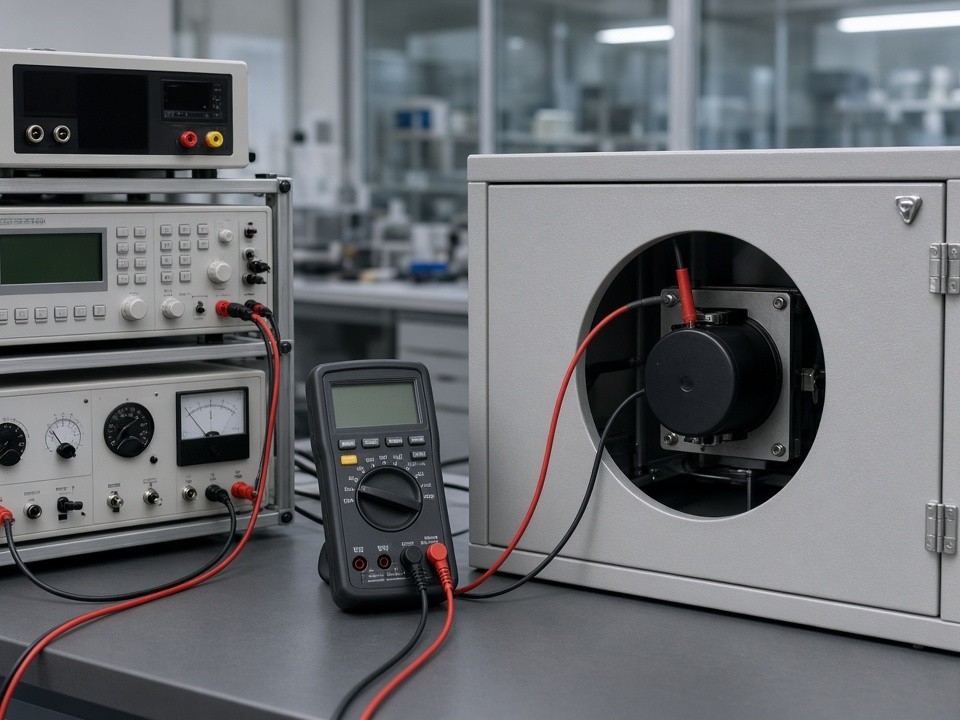
Electrical withstand voltage, insulation resistance, and mechanical impact performance are specific to the product design and test method. Materials, coatings, clearances, seals, door construction, and mounting can all affect results.
IK codes relate to resistance to mechanical impact under applicable test conditions. Do not claim a dielectric strength, insulation resistance, IK code, or TUV certification unless it has been agreed and verified for the relevant enclosure configuration.
| Requirement area | Specify in your RFQ | Why it matters |
|---|---|---|
| Electrical withstand voltage | Test voltage, duration, points, acceptance criteria | Defines required insulation performance |
| Insulation resistance | Conditions, measurement points, minimum limit | Verifies performance under defined conditions |
| Mechanical impact | Target IK code, test configuration, enclosure version | Connects the requirement to the actual assembly |
| CE conformity support | Applicable legislation, standards, requested records | Clarifies supplier scope and manufacturer obligations |
| Environmental protection | IP rating, seals, cable entries, installation conditions | Keeps protection claims tied to the complete enclosure |
Before production, share the test standards, acceptance limits, and records required. We can review the manufacturing scope and identify where testing or third-party assessment needs to be arranged.
Application-led processes
Select processes around the application
The best route depends on enclosure size, geometry, volume, appearance, and operating conditions. Heavy-duty platforms support assemblies up to six meters.
Electrical cabinets and control boxes
Laser-cut panels, CNC-formed bodies, and installed threaded hardware can simplify component mounting and service access.
Machine guards and equipment housings
MIG or laser welding can suit structural and cosmetic requirements, with fixture-based assembly supporting dimensional consistency.
Stainless steel operator panels
TIG welding and brushed finishing are available where material appearance and surface treatment matter.
Outdoor and infrastructure cabinets
Discuss the environment, sealing details, corrosion protection, and required IP or impact performance before finalizing the design.
Large machinery frames and enclosures
Assembly platforms up to 2,000 × 6,000 mm and an in-house coating line support large assemblies while reducing external processing steps.
Plan for repeatable production
For recurring batches of 10–500 units, early DFM review can help stabilize the design before repeat orders. Coordinating cut, formed, welded, and coated operations in one facility can make scheduling and issue resolution more predictable.
Production assurance
Quality checks through the production cycle
Six full-time QA/QC specialists support checks from incoming materials through production and pre-shipment inspection. Inspection plans are matched to drawings and order requirements rather than relying on a generic compliance claim.
Depending on the agreed scope, checks can include material verification, formed-part dimensions, hardware installation, weld and finish inspection, first-article review, and final inspection. Include traceability, test evidence, or specific inspection records in your RFQ so they can be reviewed before quotation.
Start your RFQ
Request a quote for your enclosure project
Send 2D drawings or 3D CAD files, target quantity, material and finish requirements, and delivery destination. For CE-related projects, include applicable legislation, required standards, target electrical and IK performance, and any TUV testing or documentation expectations.
We will review the manufacturing scope, flag drawing or process questions, and quote based on the information provided—giving engineering and procurement teams a practical basis to compare cost, production route, and compliance responsibilities.
To request an RFQ, contact us at info@enclosuremfg.com.
Company address: Building 4, Kuiqing Road, Qingxi Town, Dongguan City, Guangdong Province